
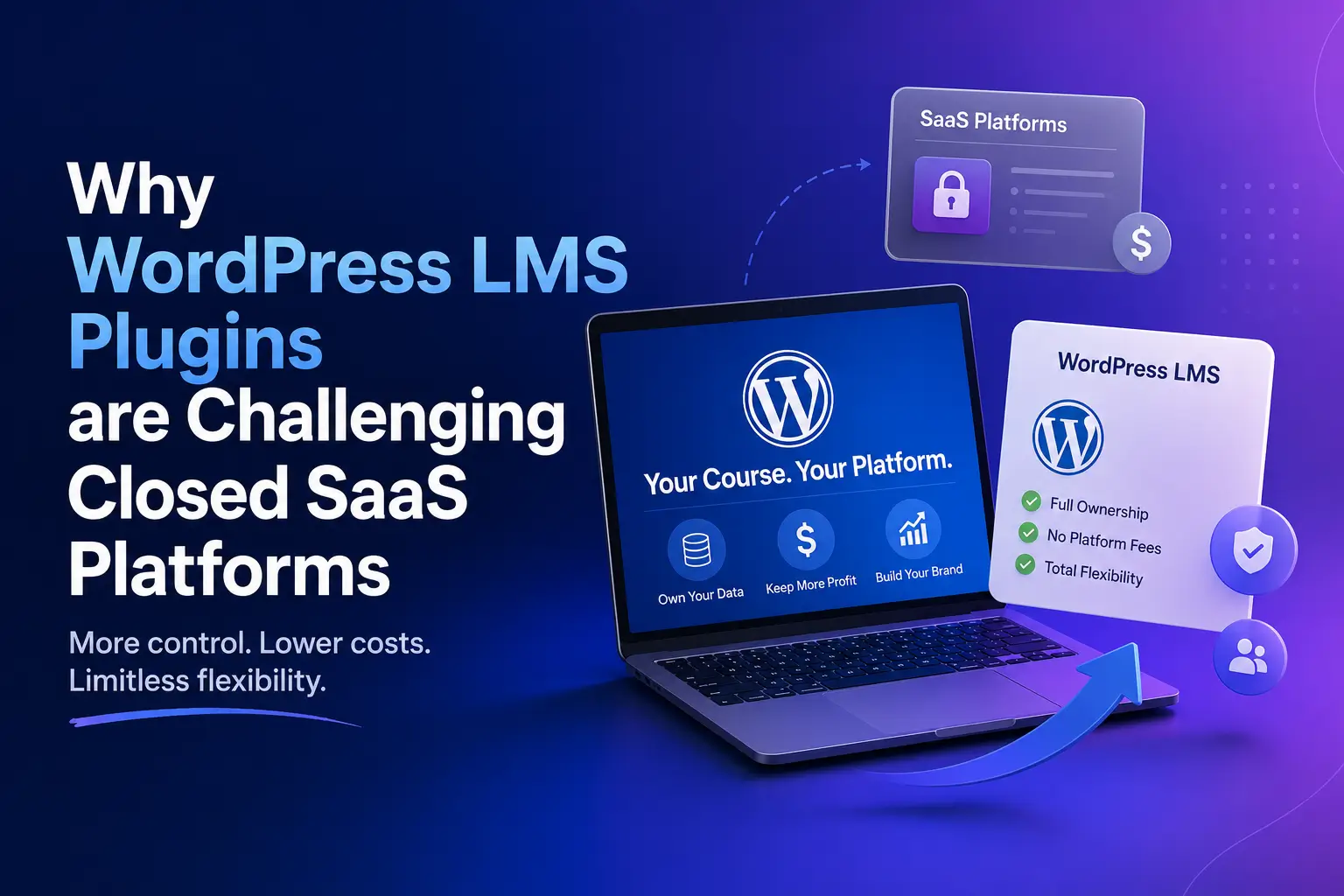
The e-learning landscape has fundamentally shifted. While closed SaaS platforms like Teachable and Kajabi once completely dominated the market, a new wave of flexible, integrated WordPress tools is changing the math for course creators and corporate trainers.
The core realization is simple: hosting your content on a third-party platform often means trading away architectural flexibility, data control, and profit margins. Today, creators are opting to build directly on their own web infrastructure.
For growing businesses, a rigid SaaS system can quickly become a ceiling. By choosing a dedicated WordPress LMS plugin instead, you retain complete ownership of your site environment while deploying modern AI tools to streamline content development.
The Problem with Rigid SaaS Ecosystems
The primary driver behind this shift comes down to how closed platforms handle integration and pricing:
- Restricted Environments: SaaS platforms often restrict you to a single, proprietary AI system or an arbitrary credit allotment. There is very little room to customize the underlying logic or tailor prompts to your specific industry.
- The Subscription Ceiling: As your student base grows, SaaS platforms often force you into significantly higher monthly pricing tiers or collect platform-side transaction fees on top of standard payment gateway processing.
Comparing the Workflows: SaaS vs. WordPress LMS
Understanding the operational differences helps explain why modern creators are keeping their courses self-hosted:
- Data Ownership: On a SaaS platform, your content lives in a closed database. On WordPress, you retain total access to your student databases, course materials, and user analytics.
- Cost Predictability: SaaS platforms rely on high monthly subscriptions and platform-specific success fees. A professional WordPress LMS plugin typically uses clear annual or lifetime licensing, allowing you to bypass platform-side transaction taxes.
- SEO and Brand Authority: Instead of sending traffic to a platform subdomain, hosting your courses on WordPress ensures every view, backlink, and organic search click builds long-term domain authority for your primary brand.
- Design Flexibility: SaaS systems limit you to standard templates. WordPress allows you to pair your LMS with thousands of custom themes and page builders.

Scaling Content Delivery with Lenxel
Building a tailored learning experience used to require an extensive development budget. Lenxel changes this dynamic by bringing advanced AI curriculum generation directly into your WordPress dashboard.
Our framework allows you to focus on the content while the technology handles the heavy lifting:
- Accelerated Layouts: Turn a core concept into a structured multi-module course with relevant quizzes in minutes.
- Direct Monetization: Integrate directly with standard checkout solutions like WooCommerce and Stripe, ensuring you pay only standard credit card processing fees rather than platform-side penalties.
- Simplified Workflows: Enter your topic, review the AI-generated outline, customize the text to match your unique brand voice, and publish.

Take Control of Your Course Platform
You do not have to accept high platform overhead or restricted workflows to get access to modern AI features. Lenxel provides a clean, professional, and entirely self-hosted alternative that lets you scale on your own terms.
Ready to build a more efficient course site? Explore what is possible with Lenxel today.